Those birthday parties, Christmas mornings, first steps — they’re on a plastic cassette sitting in a box somewhere. And here’s the hard truth: VHS tape degradation is already happening, whether you’ve played those tapes in years or not.
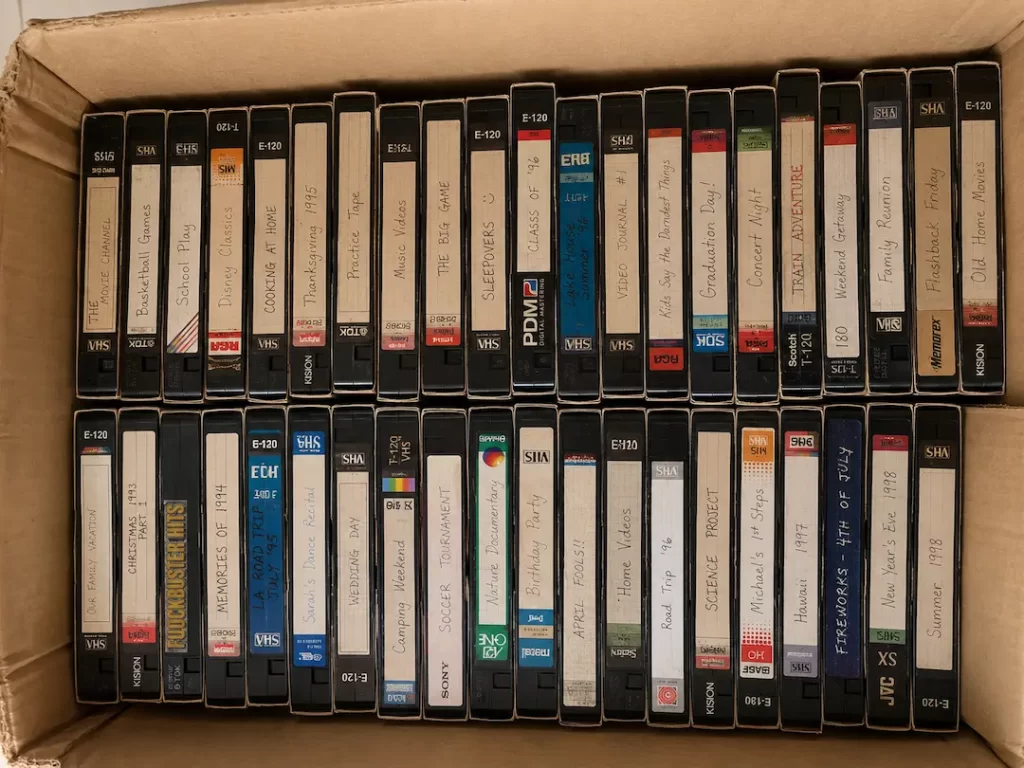
A box of labeled family VHS tapes the kind sitting in millions of attics right now
VHS tapes from the 1980s are already past their expected 25-year lifespan. The machines needed to play them are disappearing. Every year you wait, more of those memories slip away — not because of anything dramatic, but because of quiet, invisible chemistry happening inside the cassette right now.
This isn’t a scare tactic. It’s physics. And there’s still a window to act.
How Long Do VHS Tapes Actually Last?
The short answer: less time than most people think.
Under ideal conditions — cool, dry, dark storage — a VHS tape can last 25 to 30 years before noticeable degradation sets in. The problem? Most tapes weren’t stored that way. They sat in attics, garages, and humid closets. They got played repeatedly on aging VCRs with dirty heads. They moved from house to house in cardboard boxes.
If your tapes are from the 1980s or early 1990s, they’re already at or past their expected lifespan. Even tapes from the late 1990s and early 2000s are now entering the danger zone.
What’s Happening Inside Your Tapes: VHS Tape Degradation Explained.
VHS tape degradation isn’t one thing — it’s several overlapping processes, and most of them are invisible until it’s too late.
This is what magnetic tape degradation looks like on playback Once a tape reaches this stage recovery is difficult or impossible
Magnetic Layer Loss
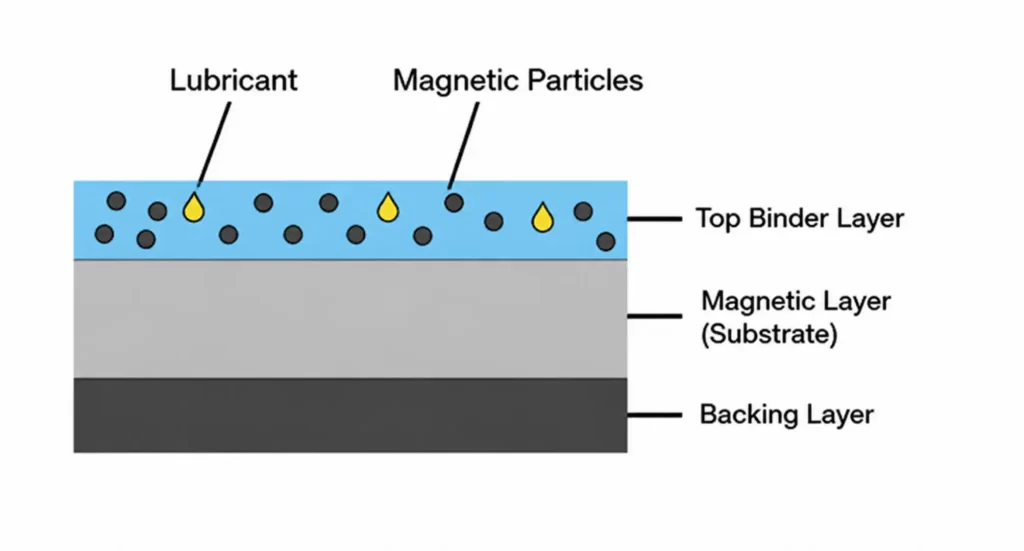
The video signal on a VHS tape is stored in a thin magnetic coating bonded to a plastic tape substrate. Over time, that bond weakens. The coating flakes and sheds — leaving gaps in the recorded image as horizontal lines, missing frames, or sections that simply go dark.
Three layers and VHS tape degradation can silently damage any one of them
Once the magnetic layer is gone, that portion of the recording is gone permanently. There is no recovering it.
Mould and Humidity Damage
Tapes stored in humid environments — basements, attics, garages — are vulnerable to mould growing directly on the magnetic coating and lubricant layer. Once mould takes hold, attempting to play the tape can cause VCR heads to drag, snap the tape, or strip the coating entirely.
Mould is one of the few types of damage that can be partially remediated by a professional — but only if caught early.
Sticky Shed Syndrome
The binder holding the magnetic particles to the tape absorbs moisture over time. As it degrades, the surface becomes tacky. When you try to play it, the tape literally sticks to the VCR heads, stretching and tearing. That squeal you hear from an old tape being played? Often sticky shed syndrome in progress.
Professional digitization labs have techniques to temporarily reverse sticky shed — but it requires specialized equipment and expertise that aren’t available at home.
The Equipment Problem Nobody Talks About
Even if your tapes are in reasonable condition, there’s another clock running: VCR availability.
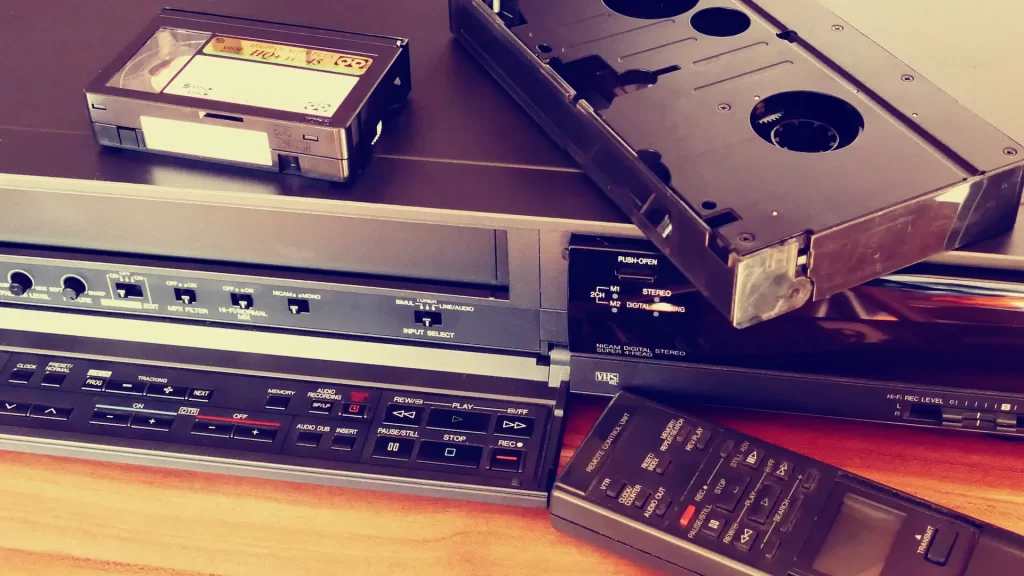
VCR production stopped in 2016 The machines needed to play your tapes are disappearing
VCR production stopped in 2016. Repair parts are increasingly scarce, and the technicians who know how to service them are retiring. Consumer-grade machines with worn heads or misaligned tracking can cause more damage to a fragile tape than not playing it would have prevented.
Professional digitization uses high-end professional decks, time base correctors, and frame-accurate capture systems — equipment that makes a visible difference in output quality, especially for tapes with existing degradation.
Warning Signs Your Tapes Are Already Deteriorating
You don’t need to play every tape to spot trouble. Look and smell first:
Musty odor when you open the case (a sign of mould)
White or fuzzy patches on the tape surface (mould)
Crinkled, wrinkled, or stiff tape visible through the cassette window
Discoloration on the leader tape or cassette housing
Labels that are peeling or disintegrating
Any of these means the tape needs professional assessment before playback.
How to Handle Old Tapes and Film
Before you start pulling cassettes off shelves or loading reels onto a projector, a few simple habits can prevent you from accidentally causing the damage you’re trying to avoid.
For VHS and video tapes:
Use clean, dry hands. For standard VHS handling, clean dry hands give better grip and control than gloves. Use nitrile gloves if you’re handling exposed tape or mould-contaminated media.
Handle the cassette housing only. If tape is visible through the window, don’t touch it.
Don’t force a tape that resists. Resistance can indicate deterioration, mould, tape binding, or other problems. Stop immediately — forcing it risks permanent damage.
Let cold tapes warm up first. Tapes stored in garages or cold spaces need time to reach room temperature. Playing a cold tape creates condensation inside the shell.
Bag any mouldy tapes and keep them separate. Mould spreads. Seal them away from the rest of your collection until a professional can assess them.
Avoid household fridges or freezers. Improper cold storage causes condensation and lubricant damage as tapes warm back up. The danger is uncontrolled temperature change, not cold itself.
Store tapes vertically, like books. Stacking them flat distorts the tape pack over time.
Keep tapes away from speakers and motors. Magnetic fields can erase recorded content.
Don’t fast-rewind old tapes repeatedly. Every pass through the mechanism puts stress on degraded tape.
For 8mm, Super 8, and 16mm film:
Use clean dry hands or lint-free nitrile gloves. Cotton gloves can snag damaged sprocket holes. Nitrile provides better grip and protection.
Check for breaks before loading. A small tear near the sprocket holes will become much worse through a projector.
Handle reels by the edges only. Never touch the film surface itself.
Don’t project brittle or shrunken film. An old projector can permanently destroy weakened film in a single pass. If film feels stiff or looks warped, get it assessed before attempting projection.
Isolate any reels with a vinegar smell. Off-gassing from vinegar syndrome accelerates decay in nearby reels. Keep affected canisters separate from the rest of your collection.
Cold storage can slow vinegar syndrome — but proper packaging matters. Ziplock bags alone aren’t sufficient. Film needs vapor-proof archival packaging before freezing, and a controlled thawing process. Without that, you risk trapping moisture and making things worse.
For a deeper look at film preservation, the Library of Congress maintains detailed guidance worth bookmarking.
How to Save Your Home Videos
The good news: if you act now, most tapes can still be rescued.
Step 1: Take Stock
Find all your tapes — VHS, VHS-C, Betamax, Hi8, Video8, MiniDV. Make a rough inventory. Note anything with visible damage or unusual odor. This helps prioritize which tapes need the most urgent attention.
Step 2: Improve Storage Conditions Immediately
Move tapes away from heat, humidity, and light. Store them upright — like books, not flat — in a cool, dry space. Remove them from sealed plastic bags that trap moisture. This buys time. It won’t reverse existing damage, but it slows further deterioration.
Digitized home videos watched together shared across generations
Step 3: Get Them Professionally Digitized
This is the only permanent solution. A professional digitization service transfers your tapes to digital files — MP4, MOV, or your preferred format — that can be stored on hard drives, backed up to the cloud, and shared with family for generations.
At Your Photo Assistant, I handle VHS digitization with high-end professional equipment and the careful attention that family memories deserve. You get high-quality digital files and the peace of mind that your home videos are permanently safe.
Don’t Wait Until the Clock Runs Out
VHS tape degradation doesn’t announce itself. It happens slowly, invisibly — and then all at once. The tape breaks. The image is gone. The memory is lost.
The families I work with who waited the longest are the ones with the most regret. Not because they didn’t care, but because they didn’t know the clock was already running.
Under ideal storage conditions, VHS tapes last approximately 25 to 30 years. Most tapes stored in typical household conditions degrade faster. Tapes from the 1980s and early 1990s are already at or past that window.
Can degraded VHS tapes be recovered?
Some types of damage — including sticky shed syndrome and light mould — can be partially treated before digitization. However, magnetic layer loss is permanent. The sooner a tape is professionally digitized, the better the result.
Is it safe to play old VHS tapes in a VCR?
Tapes showing signs of damage should not be played in a standard VCR without professional assessment first. Playing a damaged tape can permanently destroy remaining content and damage the VCR’s heads.
What’s the best way to store VHS tapes?
Store upright in a cool (60–70°F), dry (30–50% relative humidity), dark environment. Avoid attics, basements, and garages. Keep them away from magnetic fields.
How much does VHS digitization cost?
Costs vary by provider and volume. At Your Photo Assistant, pricing is based on the number of tapes and their condition. Contact me for a custom quote.
Written by Henk van den Berg, Certified Photo Manager based in Brooklyn. I help families digitize and organize a lifetime of photos, slides, and home videos, then set up a system they can keep using on their own.